
By Cameron Domes from Camrose Energy
There’s been a lot of talk lately about big data centres coming to Alberta. Given the impacts on the environment and your electricity bill, we thought it might be helpful to put together some information on the questions people are asking.
What will happen to your electricity bill?
The regulations outlined by the Alberta government require companies building these data centres to supply their own electricity generation. That sounds great on the surface, but there are some issues.
These generators don’t have to come online until the data centre is operational. That means Albertans will be footing the bill until whatever power plants they build are producing energy.
According to an analysis from the Pembina Institute, the Meta data centre alone will raise electricity costs by between $267 and $462 a year from 2027 to 2031. This doesn’t include the load from the dozens of other approved or proposed centres.
The second issue is the restrictions under the Bring Your Own Generation (BYOG) regulations. The proposed regulations limit generators to natural gas-fired generation, excluding renewable energy sources like wind and solar.
This increases demand for natural gas, driving up the price and increasing the cost of heating your home. It also has a worse impact on the environment. While natural gas is cleaner than other energy sources like coal, it pollutes far more than renewable sources like solar and wind.
How much electricity will AI data centres use?
It’s an important question to ask. We already have some data centres in Alberta for things like cloud storage, so how much will AI data centres really add to that load?
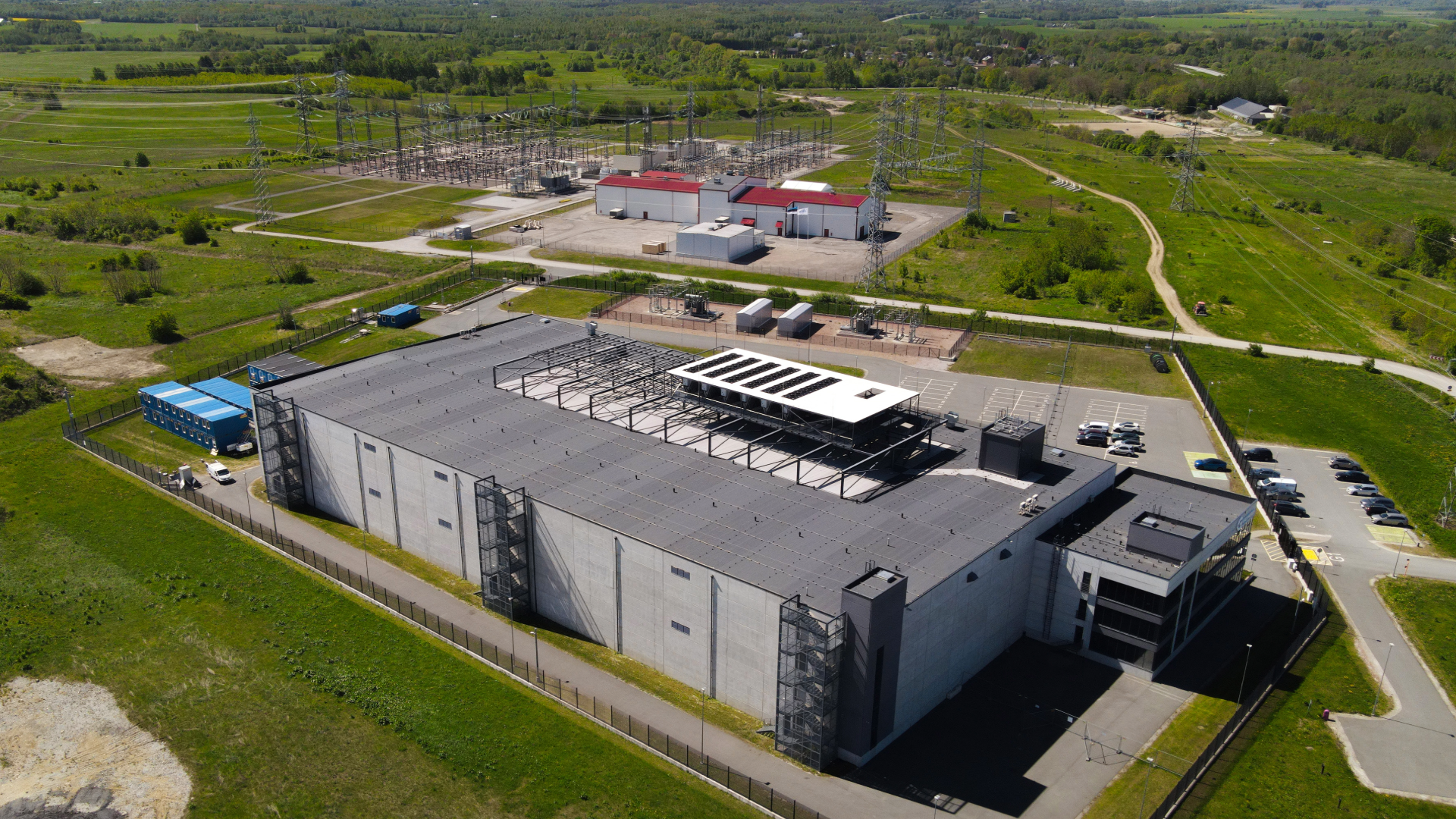
Here are some numbers to put that into perspective. At any given time, Alberta needs around 10,000 megawatts (MW), or 10 gigawatts (GW), of electricity. The proposed Sturgeon County Meta data centre will require 1 GW of power, increasing provincial demand by 10% all on its own.
We don’t have access to the load requirements of many existing data centres. Of the ones we do, the largest is a cryptocurrency data centre in Medicine Hat, which requires 67 MW to operate. We’d need nearly 15 of those to add up to the Meta data centre alone.
The Meta data centre isn’t unique, either. While there are only two AI data centres approved for construction, there are over two dozen more proposals with capacity requirements ranging from around 250 MW to 2,000 MW. If all the proposed data centres were approved and built, the load on Alberta’s grid would more than double.
How much water will data centres use?
Electricity isn’t the only resource these data centres use. Water is used to keep the computer parts cool as well. You may have heard that data centres use a great deal of water to do this, but that can be a misconception.
Some new data centres use a closed system, where the water never leaves the system like it does with older evaporative cooling technology. The older system uses 10 million litres of water per megawatt per year. A facility the size of the Meta data centre would use 10 billion litres of water a year.
The self-contained system is anticipated to reduce this water use by close to 100%, which, if accurate, is great. According to the Government of Alberta, that’s less water than a golf course.
However, this doesn’t quite address the whole problem. There’s still the matter of the natural gas-fired generators, which also use water and aren’t closed systems.
The Greenlight Electricity Centre is expected to use 1.25 million litres of water a day, or 416 million litres a year. Residential water use by Albertans in 2021 totalled 408 million litres. That’s a pretty big golf course.
What are the benefits for Albertans?
According to the Government of Alberta, the Meta data centre is anticipated to provide 3,000 jobs during construction and 300 jobs once fully operational. The average Tim Hortons employs around 25 people. While the jobs provided by the data centre are certainly better jobs, the impacts on the population and environment are far greater.
Your transmission fees will go down. The Government of Alberta estimates that transmission fees will drop by 6% from the Meta data centre alone. This is only a reduction in transmission fees, not your electricity rate or any other fees. Transmission fees are regulated fees that everyone connected to the grid pays. They vary by region. In Camrose, they’re around 4.3¢/kWh, compared with 4.1¢/kWh in Edmonton and 3.9¢/kWh in Calgary.
If we assume the average is around 4.1¢/kWh, a 6% reduction would see that fall to 3.85¢/kWh. Let’s do some math using the average household usage of 700 kWh to figure out how much you’d save.
| Transmission Cost | Calculation | Monthly Cost |
| With current fees | 700 x $0.041 | $28.70 |
| With reduced fees | 700 x $0.0385 | $26.95 |
That’s a saving of $1.75 a month and $21 a year. Now, we like saving money as much as the next person. Even a little bit here and there can help. But if the Pembina Institute’s estimate is even remotely accurate, these savings are blown out of the water by the 4 years Meta is allowed to connect to the grid before supplying its own generation.
It can be done better.
We see issues with the proposed plans to bring large data centres into Alberta, and those issues will only grow as more data centres are built. While there are certainly some benefits, to us they seem to be outweighed by the drawbacks. Three hundred highly skilled jobs are great, but in an already expensive time, a higher utility bill won’t feel nice for the rest of Albertans.
Regardless of how you feel about AI, more responsible ways of bringing AI data centres to Alberta have been proposed. These include changing the restrictions to allow renewable generation, instead of limiting the options to natural gas-fired plants. Another is changing BYOG regulations so data centres can’t connect to the grid before their own generation comes online. There are ways to reduce the impacts of these data centres for the benefit of Albertans and our environment.


